The island before the answer
I work on AI visibility for Phuket service businesses by reading the city first: its routes, mixed languages, category shortcuts, and quiet signs of reliability. A map pin in Patong, a Thai clinic phrase in Phuket Town, and a villa reply from Cherng Talay can all change the same customer's sense of risk. The method is practical. Look at how trust is formed here, then make sure AI systems can see the same thing.
The reader
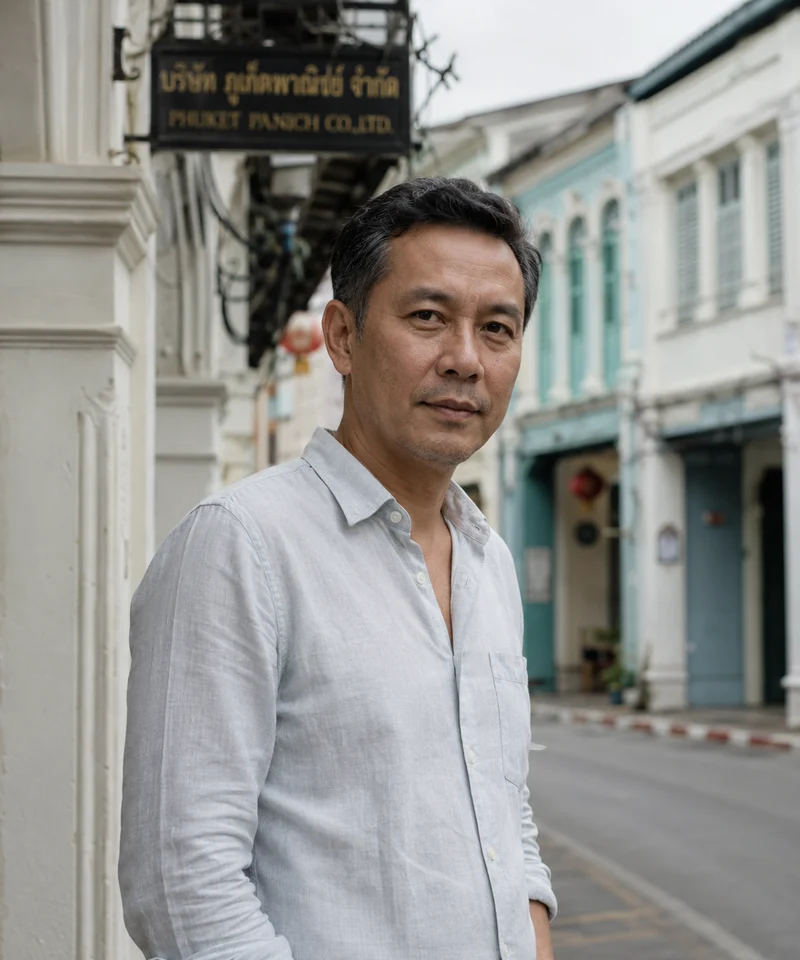
AI answers miss Phuket when they flatten local trust into neat categories with no route, language, or risk behind them.
At a red light near Central, I can usually spot three different versions of the same business problem before the signal changes. A van from Chalong carries a diving logo in English, a clinic board uses polite Thai that says more than the service list, and a visitor in the back of a taxi is typing "best near me" with one hand. That small crossing is how Phuket works now. Trust moves through roads, accents, signs, staff replies, map pins, and half-remembered recommendations. AI systems pick up some of it. They miss plenty.
I was born in Phuket Town, close to old shophouses where Hokkien family names sit beside southern Thai rhythm and tourist English. That mix trained my ear before I had a name for the work. Patong often writes for urgency; Rawai leans on familiarity and repeat names; Laguna wants polish, but not too much noise. In staff rooms, people shorten place names differently than tourists do. Thai service phrasing may signal care through restraint, while English booking copy has to calm risk fast. These are not decorative details. They decide whether a business is understood as premium, safe, local, casual, medical, tourist-only, or simply vague.
Before building this practice, I worked around local search copy, service intake interviews, guest-facing messages, and informal reputation notes for island operators. I learned to compare what a business says about itself with what customers actually need to know before they book. Now I use that habit for GEO: service page structure, FAQ language, category framing, bilingual proof phrases, and the small pieces of evidence that make an AI answer more likely to describe a business accurately. My position is plain. Phuket visibility is won by making real trust legible without sanding away the local texture.
Route into the work
- 2010
Local search copy begins
Started writing and revising service descriptions for island businesses where map discovery and customer hesitation were already tied together.
- 2013–2015
Guest-message fieldwork
Worked around booking replies, intake questions, and front-desk phrasing for operators dealing with tourists, residents, and Thai families.
- 2016–2019
Reputation patterns by route
Built a habit of comparing how services were described across Patong, Rawai, Chalong, Cherng Talay, and Phuket Town.
- 2020–2022
Bilingual trust mapping
Focused more closely on how Thai politeness, English risk language, and category labels change perceived authority.
- 2023
AI answer audits
Began testing how ChatGPT-style systems summarize Phuket service categories and where useful local distinctions disappear.
- 2024 onward
Phuket GEO practice
Turned field notes into audits, content briefs, and implementation cycles for service businesses that depend on trust-led discovery.
Bring the real customer situation into the audit.
I look at how AI describes your category, then connect that output to the person trying to choose under pressure.
Send a brief